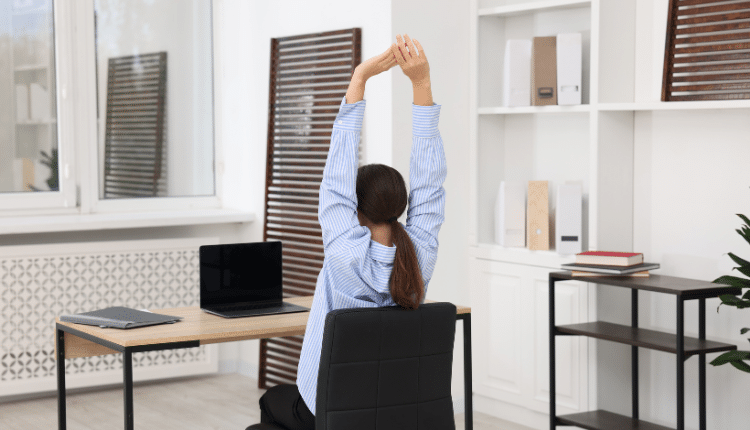
In the architecture of modern life, the office desk has become our most inhabited landscape. While these stations are the engines of productivity, prolonged sitting demands a physical tax that our bodies often pay in the currency of chronic pain. If you spend hours anchored to a computer screen, you are likely familiar with the creeping rigidity in your spine or the heavy, leaden sensation across your shoulders.
At Niloufar Abi, we believe that professional success shouldn’t come at the cost of your physical alignment. By integrating corrective office exercises and understanding the therapeutic role of professional Massage Services, you can transform your workspace from a source of strain into a sanctuary of health.
The Science of the “Hunched” Professional
The sedentary nature of office work often leads to a condition known in clinical circles as Upper Crossed Syndrome. This occurs when the chest muscles become tight and the back muscles become overstretched and weak, pulling the shoulders forward and the head downward. This imbalance places an immense mechanical load on the cervical vertebrae, leading to what many describe as “tech neck.”
Understanding these patterns is the first step toward preventing herniated discs and chronic inflammation. Our goal is to provide you with the tools to reset your posture in five minutes or less.
1. Relieving Neck and Shoulder Tension at Your Desk
The upper trapezius and levator scapulae are the first responders to work-related stress. When deadlines loom, these muscles tighten instinctively. To release this tension without leaving your chair, try these targeted movements:
-
Lateral Neck Flexion: Gently lower your right ear toward your right shoulder. Hold for 20 seconds, feeling the breath enter the side of the neck. Repeat on the left side.
-
The Scapular Reset: Shrug your shoulders toward your ears, then roll them back and down in a slow, deliberate circular motion. This encourages blood flow to the upper back.
-
The Chin Tuck: Sit tall and pull your chin straight back (creating a “double chin”). This aligns the cervical spine and counteracts the forward-leaning habit of looking at monitors.
For deeper relief of chronic knots that stretching alone cannot reach, exploring specialized Spa Treatments can help reset the nervous system and soften stubborn fascia.
2. 5-Minute Corrective Office Exercises
You don’t need a gym membership to maintain spinal health. These movements are designed for the limited space of an office or home studio:
The Seated Chest Opener
Interlace your fingers behind your back or grasp the back of your chair. Inhale deeply, lifting your chest toward the ceiling and pulling your shoulder blades together. This move directly counters the “slump” and relieves pressure on the thoracic vertebrae.
Seated Spinal Rotation
While seated, place your right hand on the outer edge of your left knee or the chair’s armrest. Slowly twist your torso to the left, using the chair for leverage. This rotation improves the mobility of the spine and aids in “massaging” the internal organs.
Expert Tip: Performing these movements every two hours improves blood circulation in soft tissues and prevents the accumulation of lactic acid, which causes that “heavy” feeling at the end of the day.
3. The Golden Strategy for Preventing Lower Back Pain
Sitting increases the hydrostatic pressure within your lumbar discs by up to 40% compared to standing. Over time, this pressure can lead to degenerative changes. Beyond stretching, the secret to a healthy back is spinal fluidity.
The Seated Cat-Cow
Place your hands on your knees. As you inhale, arch your back and look slightly upward (Cow Pose). As you exhale, round your spine and look toward your navel (Cat Pose). This movement keeps the intervertebral fluid viscous and the spine supple. For those looking to take this further, our guide on Hatha Yoga for beginners offers more foundational poses to protect the back.
4. The Role of Massage in Occupational Wellness
Sometimes, muscle adhesions (knots) become so dense that self-stretching is insufficient. In these cases, therapeutic intervention is required.
-
Deep Tissue Massage: Focuses on the deeper layers of muscle tissue to release chronic patterns of tension.
-
Nuad Thai (Traditional Thai Massage): Often called “Lazy Man’s Yoga,” this treatment involves assisted stretching that is perfect for restoring range of motion to stiff joints. You can learn more about this ancient art in our guide to Nuad Thai.
If you are ready to invest in a pain-free body, you can Book Now at one of our premium branches.
5. Ergonomics: Building a Body-Friendly Workspace
Your environment should support your anatomy, not work against it. Follow these three golden rules of office ergonomics:
-
Eye-Level Alignment: Your monitor should be positioned so that the top third of the screen is at eye level.
-
The 90-Degree Rule: Your elbows, hips, and knees should all maintain a roughly 90-degree angle.
-
Lumbar Support: Use a chair with proper lower back support, or place a small rolled towel at the curve of your back to maintain the natural lumbar arch.
Conclusion: A Pain-Free Body is Your Best Asset
Investing in your physical health is the best career decision you can make. By consistently practicing corrective office exercises and paying attention to the signals of neck and shoulder tension, you not only increase your productivity but also safeguard your long-term mobility.
Your body is your home; treat it with the care and serenity it deserves.
Would you like me to create a personalized weekly stretching routine based on these movements?