Yoga for Kids: A Complete Guide to Benefits, Age-Appropriate Flows, and Mindful Parenting
In today’s hyper-accelerated world, dominated by digital stimuli, academic pressures, and packed schedules, we often forget that stress is not exclusive to adults. Children absorb the tension of their environments, often without the vocabulary to express it. As parents and guardians, we are constantly searching for the right tools to equip our children for a balanced life. Amidst this search, yoga emerges not as a fleeting trend, but as a timeless treasure—a gift of grounding that we can offer them from their earliest years.
But is yoga truly beneficial for children, or is it merely an adult practice repackaged for little ones? At Niloufar Abi Spa, where we believe deeply in holistic wellness, we view health as a full circle involving the body, mind, and spirit. In this comprehensive guide, we explore the profound impact of yoga on children, from hidden developmental benefits to practical tips for bringing this practice into your home.
Why Yoga is More Than Just Play
Yoga for children is far more than a set of stretching exercises or a physical game; it is a complete “Mind-Body” practice. While adults often turn to yoga to undo years of accumulated stress and bad posture, children have the unique advantage of using yoga to build a strong foundation from the very start. It teaches them to inhabit their bodies with grace and to navigate their emotions with awareness.
1. Physical Mastery: From Flexibility to Deep Sleep
A child’s body is in a state of constant growth and flux. Yoga acts as a gentle guide, ensuring this growth happens harmoniously.
-
Enhancing Flexibility and Strength: Unlike high-impact sports that can sometimes strain growing bodies, yoga poses (asanas) gently stretch muscles and strengthen joints. This foundational flexibility reduces the risk of injury in other activities and daily life.
-
Refining Balance and Coordination: Poses like the “Tree Pose” require focus and stability. These exercises directly engage the central nervous system, significantly improving proprioception (the awareness of body position) and hand-eye-foot coordination.
-
Cultivating Body Awareness: In a sedentary digital age, many children lose touch with their physical selves. Yoga teaches them to listen to their bodies, distinguishing between the sensation of tension and the relief of relaxation.
-
Improving Sleep Quality: Perhaps the most welcome benefit for parents is the effect on sleep. Yoga’s breathing and relaxation techniques activate the parasympathetic nervous system (the “rest and digest” mode). This is incredibly helpful for children who struggle to settle down at night, offering a calming effect similar to the results seen in therapeutic massage.
2. Mental and Emotional Fortitude: Building a Mindful Brain
This section highlights perhaps the most critical gift yoga offers the “digital generation.”
-
The Art of Focus: In a world of endless notifications, yoga teaches the rare skill of single-tasking. Holding a pose or counting breaths acts as resistance training for the brain’s attention muscles.
-
The Anxiety Toolkit: Yoga equips children with a mental toolbox. They learn that when they feel anger, fear, or anxiety rising, they have an internal mechanism—their breath—to regain control.
-
Boosting Self-Esteem: Unlike most childhood activities, yoga is strictly non-competitive. There is no score, no winner, and no loser. Children learn to accept their bodies as they are and respect their unique abilities, fostering a positive self-image.
3. Social Skills: Lessons for Life
When practiced in a group or family setting, the social benefits of yoga blossom.
-
Respect and Empathy: Children learn to respect personal boundaries (represented by the yoga mat) and collaborate in partner poses, fostering trust.
-
Patience and Resilience: Mastering a new pose takes time. This process teaches children that instant gratification isn’t everything; patience and persistence yield the best results.
The Best Age to Start: A Timeline
“When should we start?” is a common question at Niloufar Abi. The answer is that any age is the right age, provided the approach is tailored to the child’s developmental stage.
Toddlers (2 to 4 Years): Yoga as Play
At this stage, forget structure.
-
Approach: Sessions should be brief (10–15 minutes), filled with games, songs, and animal noises.
-
Focus: Movement and fun. Poses are taught through storytelling (“Let’s stretch like a cat”) rather than technical instruction.
Preschool (4 to 7 Years): Imagination in Motion
Preschoolers can hold poses slightly longer and grasp simple concepts.
-
Approach: Storytelling is key. A yoga session becomes an adventure—a trip to the moon or a dive into the ocean—where every pose is a character or object in the story.
-
Focus: Introduction of basic poses, balance games, and very simple breathwork (e.g., “blowing out a magical candle”).
School Age (8 to 12 Years): Structure and Flow
Children now crave a bit more challenge and structure.
-
Approach: Classes can extend to 30–45 minutes. Simple “flows” (sequences of movements) can be introduced.
-
Focus: Understanding the link between breath and movement, learning Sanskrit names of poses (if interested), and practicing guided relaxation.
Teens (13+ Years):
Teen yoga mirrors adult yoga but should focus heavily on the specific stressors of adolescence: exam anxiety, peer pressure, and body image issues.
10 Golden Rules for Teaching Yoga at Home
Transforming your living room into a sanctuary can be a bonding experience. Follow these tips for success:
-
Prioritize Fun: If it isn’t fun, they won’t do it. Use upbeat music and games like “Yoga Freeze Dance.”
-
Short and Sweet: Attention spans are limited. Consistency beats intensity. Ten minutes daily is far superior to a forced hour once a week.
-
Ditch Perfection: The goal is not the perfect posture; the goal is movement and breath. Never criticize a child’s form harshly.
-
Be the Role Model: Children mimic what they see. When you practice with genuine enthusiasm, they will follow.
-
Use Visuals: Yoga cards, picture books, or videos can help children visualize the shapes they are trying to make.
-
Focus on Breath: Use metaphors. “Fill your belly like a balloon” is easier to understand than “engage your diaphragm.”
-
Create a Sacred Space: Even if it’s just a corner, rolling out a mat signals to the brain that it is time to focus.
-
Safety First: Ensure the space is clear of furniture and that no movements force joints into painful positions.
-
Set the Mood with Audio: Use calming instrumental music for cool-downs and rhythmic tracks for active phases.
-
End with Savasana: Always conclude with relaxation. Cover them with a light blanket and tell a short, soothing visualization story.
5 Simple Poses to Try Today
Here are five safe, effective poses to introduce to your little ones:
-
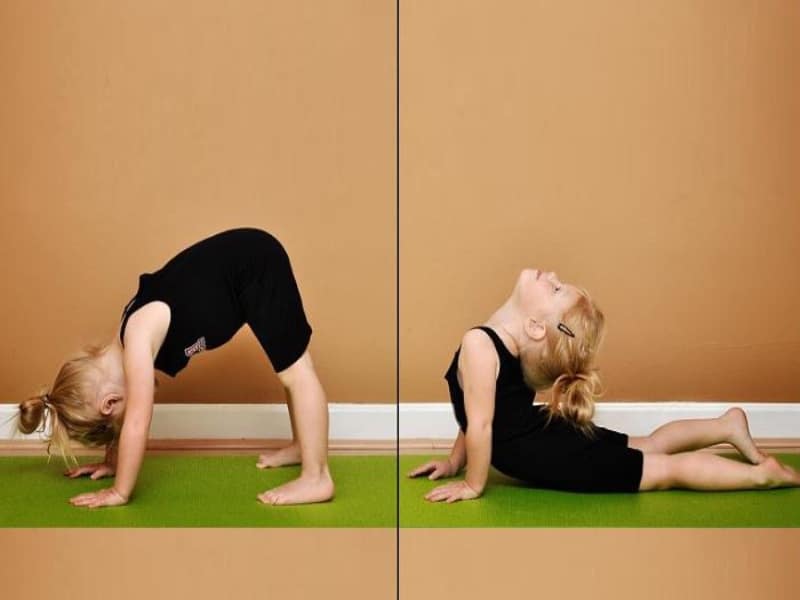
Cat/Cow Flow: Excellent for spinal health. On hands and knees, inhale to arch the back and look up (Cow), exhale to round the spine and look at the belly (Cat).
-
Downward Facing Dog: A childhood favorite. It stretches the entire back body and builds upper body strength.
-
Tree Pose: The ultimate focus builder. Standing on one leg, place the other foot on the ankle or thigh (never the knee). Raise branches (arms) to the sky.
-
Butterfly Pose: Seated, soles of the feet touching, knees gently flapping like wings. Great for hip flexibility.
-
Starfish (Savasana): The final relaxation. Lying flat on the back, limbs spread wide, eyes closed.
The Holistic Circle: Wellness for the Whole Family
Yoga is a vital piece of the wellness puzzle, but it is not the only piece. At Niloufar Abi Spa, we champion a philosophy where self-care is a family value. You cannot pour from an empty cup; to be a patient, mindful guide for your child, you must also nurture your own well-being.
If you find yourself carrying the weight of parenting stress, our Massage Services can help you reset your nervous system, allowing you to return to your family with renewed patience and energy. Furthermore, treating the family to an experience at our facility can reinforce the importance of relaxation. Explore our diverse Spa Services to find treatments that align with your wellness goals.
Conclusion: A Lifelong Gift
Introducing your child to yoga—whether through a class or in your living room—is an investment in their future self. You are helping mold an adult who is self-aware, emotionally balanced, and capable of finding silence in a noisy world. Yoga teaches them that no matter how chaotic life becomes, they always carry an anchor of peace within themselves.
We are committed to supporting your journey toward tranquility. If you are ready to prioritize wellness for yourself and your loved ones, we invite you to Book an Appointment at one of our branches today.
For more insights into our philosophy and ethos, you can read more on our About Us page, or if you are new to the spa experience, review our Spa Etiquette guide to ensure a seamless visit.